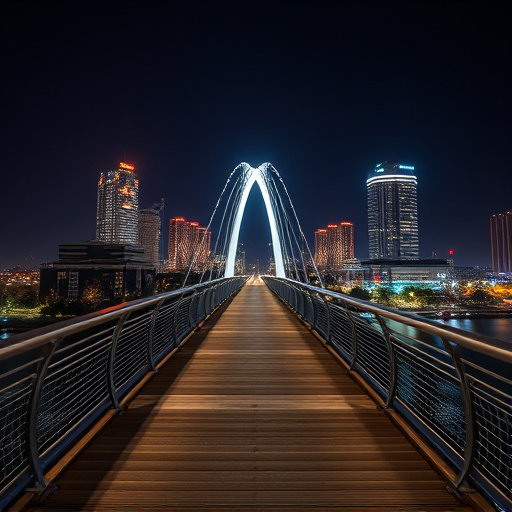
Austin TX's illuminated pedestrian bridges, like Ann and Roy Butler Hike-and-Bike Bridge over Lady Bird Lake, attract photographers seeking captivating night shots. Urban lighting design experts balance functionality and aesthetics to create safe, visually rich environments. The Pfluger Pedestrian Bridge offers unique perspectives and intricate lighting for night photography, with tips including using a tripod, adjusting exposure settings, experimenting with angles and compositions, and capturing events for enhanced cityscape lighting. Austin's iconic bridges draw millions annually, showcasing the city's vibrant energy at night.
The vibrant cityscape of Austin, TX, has long captivated photographers seeking to capture its unique character at night. However, illuminating the urban landscape while preserving the aesthetic integrity of photographs presents a challenge. This article delves into the transformative impact of the Pfluger Pedestrian Bridge lights on night photography in Austin. We explore how these strategic lighting enhancements not only brighten the city’s iconic structure but also elevate the visual appeal of nocturnal imagery, offering a new perspective on this dynamic metropolis.
- Unlocking Austin TX's Nighttime Beauty: The Role of Pedestrian Bridge Lights
- Enhancing Photography Techniques: Capturing Austin's Illuminated Bridges at Night
Unlocking Austin TX's Nighttime Beauty: The Role of Pedestrian Bridge Lights
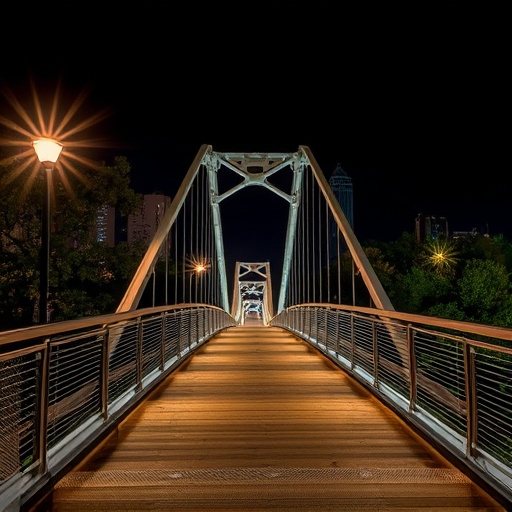
Austin TX, known for its vibrant culture and stunning landscapes, has a unique asset that often goes unnoticed by day—its pedestrian bridges bathed in captivating lights. These illuminated structures don’t just serve as safe crossings; they transform the city’s nighttime skyline, offering photographers and art enthusiasts an unparalleled canvas. The strategic lighting of these bridges, particularly during special events or seasonal celebrations, plays a pivotal role in enhancing Austin TX’s allure, making it a premier destination for night photography.
The impact of well-designed bridge lighting is profound. Consider the iconic Ann and Roy Butler Hike-and-Bike Bridge spanning Lady Bird Lake. When adorned with festive lights during holiday seasons, it becomes a beacon drawing locals and visitors alike to capture breathtaking shots of both the bridge and the city’s skyline reflected on the water. This phenomenon isn’t confined to special occasions; permanent lighting installations on bridges like these have become integral to Austin’s identity, attracting photography enthusiasts from around the world who seek to immortalize its beauty under the stars.
Experts in urban lighting design emphasize the importance of balancing functionality and aesthetics. In Austin TX, this means creating lighting plans that not only illuminate paths safely but also preserve the natural ambiance and visual appeal of the environment. This dual consideration results in lights that enrich the experience for pedestrians while enhancing the city’s allure. By understanding these principles, city planners and designers can unlock the full potential of pedestrian bridge lights, ensuring Austin TX remains a vibrant destination both day and night.
Enhancing Photography Techniques: Capturing Austin's Illuminated Bridges at Night
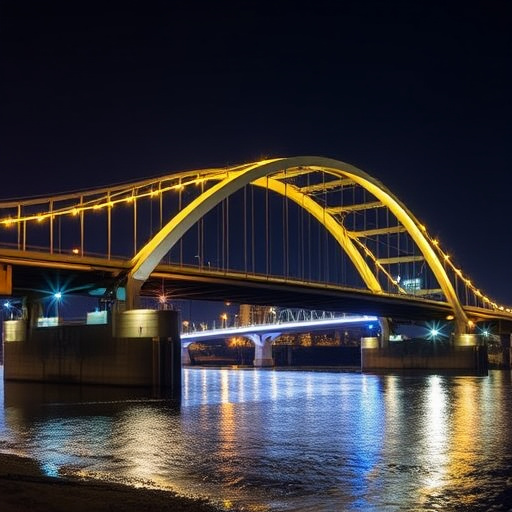
The Pfluger Pedestrian Bridge in Austin TX has become a haven for night photographers seeking to capture the city’s illuminated landmarks. The bridge’s strategic location along Lady Bird Lake offers a unique perspective, while its intricate lighting design provides an ideal backdrop for stunning visual storytelling. Expert photographers have long recognized the potential of these illuminated bridges at dusk, leveraging the soft, diffused light to create ethereal images that highlight Austin’s urban landscape.
To master night photography on the Pfluger Pedestrian Bridge, consider using a tripod to stabilize your camera and allow for longer exposure times. This is crucial during low-light conditions, enabling you to capture the city lights and lake reflections without introducing blur. Experiment with ISO settings; lower values (100-400) can enhance detail but require more time to gather light, while higher ISOs offer faster shutter speeds but may introduce noise. Additionally, adjusting your aperture (f/2.8–f/8) allows you to control depth of field, making it possible to isolate the bridge lights from the foreground or include elements like clouds and trees for added context.
Photographers should also explore different angles and compositions. The bridge’s arc offers a dynamic silhouette against the night sky, while capturing the span over the water creates dramatic reflections. Utilize the city skyline as a backdrop, aiming to time your shots during major events like fireworks displays or holidays when decorative lighting illuminates buildings along the lakefront. Data from Austin’s tourism board shows that these iconic bridges attract millions of visitors annually, making them prime subjects for capturing the city’s vibrant energy and allure at night.
The strategic lighting of pedestrian bridges in Austin TX has emerged as a powerful tool to enhance the city’s night photography scene. By unlocking the nighttime beauty of these structures, the illuminated bridges become captivating subjects, offering photographers unique opportunities to create stunning visual narratives. Through this article, readers have gained valuable insights into the techniques for capturing Austin’s illuminated bridges, from understanding the best times to capture dramatic shadows to utilizing long exposures to embrace the city’s vibrant neon lights. Armed with these knowledge points, enthusiasts and professionals alike can now explore and preserve the enchanting allure of Austin TX under the night sky, transforming the urban landscape into a captivating canvas for artistic expression.